- Home
- Ingredients
- The Gummy Base
The Gummy Base In Gelagen
Not a skin ingredient. Explained here anyway, because the sugar question deserves an answer before checkout.

At A Glance
The Gummy Base On The Label
Two gummies a day is the serving. What follows is the long version: the chemistry, the shortfall, the ceiling and the caution, written out rather than compressed into a claim.
The Gummy Base In Plain Words
Everything above this page is a vitamin. This page is about the chewy part that carries them, and it exists because that part is the one most likely to matter to somebody at checkout. Gelagen is set with pectin, the gelling fibre found naturally in apple and citrus peel, rather than with gelatine. Pectin comes from fruit, so the base itself contains nothing derived from an animal.
What It Does Inside A Skin Cell
A gummy has three jobs beyond tasting pleasant: hold its shape at room temperature, keep the vitamins evenly distributed through every piece, and stay stable long enough to reach a bathroom shelf and sit there. Pectin does the first, mixing and depositing at controlled temperature does the second, and a small amount of acid plus sensible packaging does the third. Citric acid gives the tartness and helps the set; natural flavour and fruit-based colour do what their names suggest.
What Running Short Looks Like
There is no such thing as a deficiency of gummy base, so this block gets used differently. What runs short in the gummy category is candour about sugar, so here it is. A gummy needs sugars to set, to carry flavour and to stay stable. Gelagen's serving is two gummies and the sugar content of that serving is declared on the nutrition panel of the bottle. It is a small amount by the standards of anything you would eat as a sweet, and it is not nothing. Anyone counting sugar for a medical reason should read that panel before ordering rather than after.
How Much Is Enough, And How Much Is Too Much
Two gummies is the daily serving and a bottle holds sixty, which is a thirty-day supply. There is no benefit to taking four instead of two: the vitamin amounts on the panel are calculated for the stated serving, and the one nutrient here with a real ceiling — vitamin A — is a reason to stay at it rather than a reason to experiment. If you have diabetes or are managing carbohydrate intake closely, treat the two gummies as the small food item they are and account for them.
Where Food Supplies It
Pectin is not exotic. It is the same fibre that sets homemade jam, and you eat it every time you eat an apple with the skin on, a pear, a plum or the pith of a citrus fruit. Commercially it is extracted mostly from apple pomace and citrus peel left over from juicing, which is a genuinely sensible use of a by-product. In the quantity present in two gummies it makes no meaningful contribution to your fibre intake, and this page is not going to pretend otherwise.
Where To Be Careful With The Gummy Base
Three practical points. Sugar content is on the panel and matters if you are managing it. Gummies look and taste like sweets, so they belong out of reach of children — the vitamin A content in particular is a reason a bottle should not be treated as a jar of candy. And heat is the enemy of a pectin gummy: leave the bottle in a hot car or a sunny window and the pieces will fuse into a single block. Store it somewhere cool, dry and closed.
How It Works With The Rest Of The Formula
The base is the delivery vehicle for Vitamin A, Biotin and the other four vitamins, and the honest argument for it is compliance rather than chemistry. A capsule with no sugar that sits unopened in a drawer does less for anybody than a gummy that gets eaten every morning. That is the trade the format makes, and knowing what the trade is beats being sold a story in which there is no trade at all.
What the bottle says wins. The serving is two gummies, and every vitamin with an established reference intake is declared on the supplement facts panel with a percent daily value beside it. If a figure quoted on this page ever disagreed with the panel printed on the bottle in your hand, the panel is correct and this page is out of date. Nothing here is a diagnosis, a prescription or a substitute for asking a clinician.
Answers
The Gummy Base: Common Questions
The ones that come up about this ingredient rather than the product.
Does Gelagen contain gelatine?
No. It is set with pectin, which comes from fruit, so the base contains no animal-derived gelling agent. Check the full panel on your bottle for anything else relevant to your diet.
How much sugar is in Gelagen?
The figure for the two-gummy serving is printed on the nutrition panel of your bottle. It is small by the standards of a sweet and is worth reading if you are counting carbohydrate.
Is Gelagen suitable for vegans?
The gelling agent is plant based. Whether the finished product carries a vegan certification is something the label and the official product page will state, so check there.
Can I take more than two gummies?
No. The amounts on the panel are calculated for a two-gummy serving, and the vitamin A here has a genuine upper limit worth respecting.
Why gummies instead of capsules?
Because people take them. The honest answer is compliance, not a chemical advantage, and the cost of that choice is the sugar needed to make a gummy set.
Nearby
The Ones It Works Beside
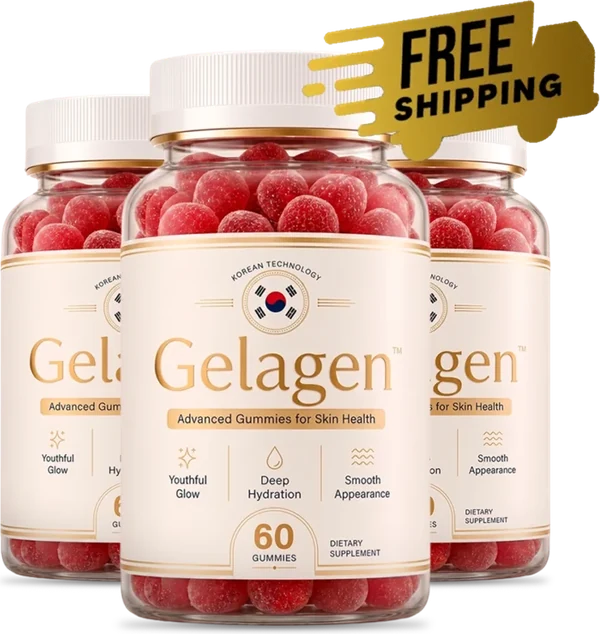
Your First Bottle Of Gelagen
Two gummies with breakfast, a page on this site for every vitamin in them, and two months to send the lot back if your skin disagrees.
- Two gummies daily, chewed before a meal
- Six vitamins, every one printed on the label
- Free US delivery plus six guides on the 3 and 6 bottle orders
- Sixty days to change your mind, opened bottles included